The Puma Speedcat, a descendant of high-performance footwear, first emerged in 1999 [cite: 2, 3, 4, 5, 6, 19, 28, 31, 34]. Its genesis was rooted in the demanding world of Formula 1 racing, meticulously engineered for the sport's elite drivers [cite: 2, 19, 34]. This model transitioned from the racetrack to become a cultural icon, marking a significant shift in footwear design.
Primarily intended for casual wear, the Speedcat is a versatile choice suitable for lifestyle and motorsport-inspired street style [cite: 7, 10, 11, 12, 14, 16, 17, 20, 21, 23, 29, 30, 32, 33]. It provides everyday functionality, enhanced by an OrthoLite® sockliner for added comfort [cite: 7, 10, 11, 12, 14, 16, 17, 20, 21, 23, 29, 30, 32, 33]. The design, inspired by racing tires, ensures a lightweight feel and adaptable traction for various urban environments.
The Puma Speedcat has become a staple of modern style, frequently sported by trendsetters [cite: 25, 26, 27, 28]. Emily Ratajkowski was seen in New York City, demonstrating the shoe's adaptability [cite: 28]. Dua Lipa embraced the model during the Sunny Hill Festival, solidifying its place in music and fashion [cite: 28]. Rihanna, in Santa Monica, further showcased its appeal [cite: 27]. Rosé of Blackpink, spotted in Germany, also contributed to its global recognition [cite: 25].
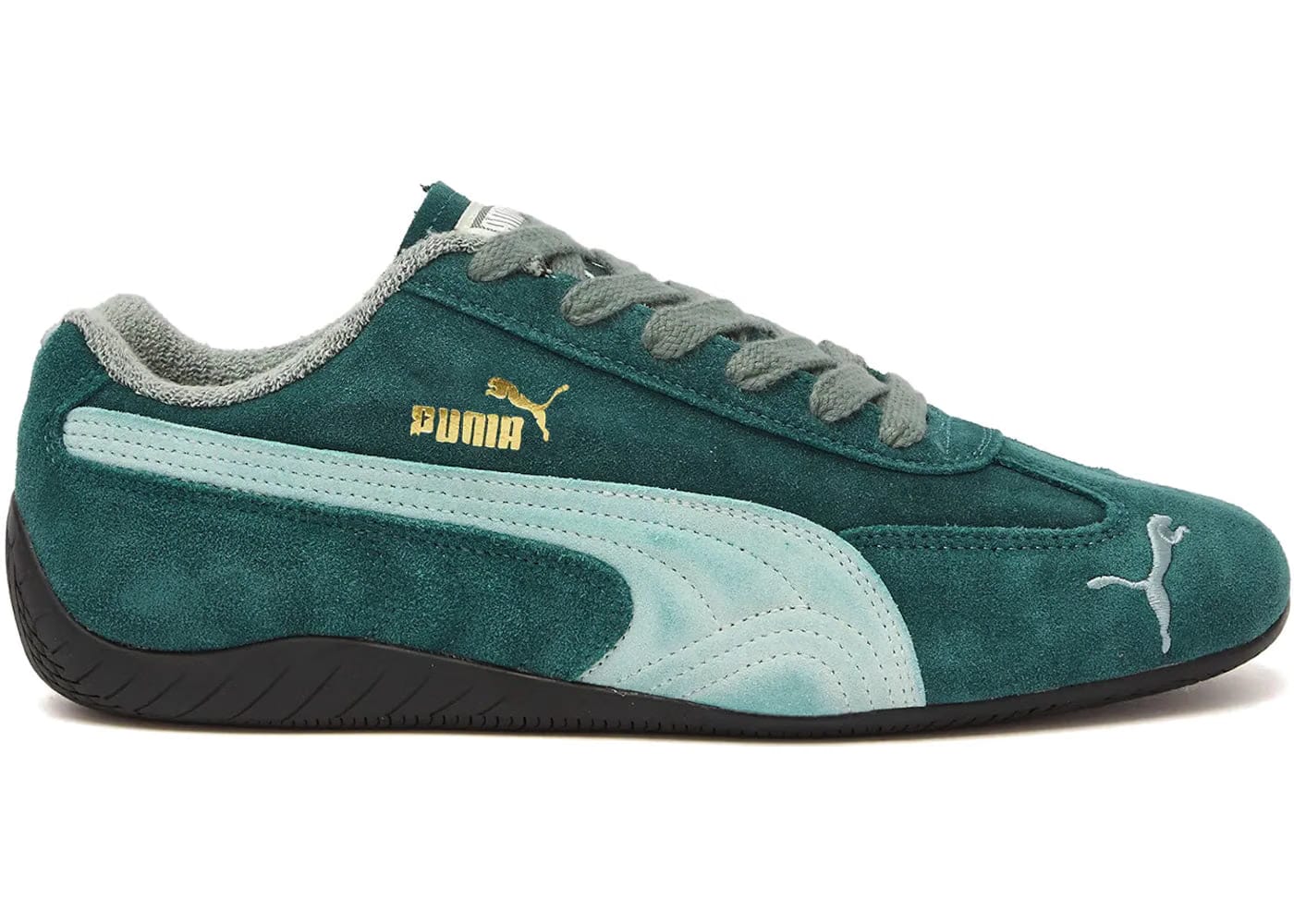
This iteration of the Speedcat features a low-profile silhouette, designed with a sleek and faded effect [cite: 1, 7, 10, 11, 12, 14, 16, 17, 20, 21, 23, 29, 30, 32, 33]. The upper is crafted primarily from suede, complemented by textile elements and a durable rubber outsole [cite: 7, 10, 11, 12, 14, 16, 17, 20, 21, 23, 29, 30, 32, 33]. Signature details include the embroidered Puma Cat logo, lace closure, and gold-tone accents, reflecting a blend of performance and style.







.svg)
.svg)
.svg)