The Adidas Gazelle first emerged in 1966, establishing itself as a pioneer with its suede upper construction [cite: 1]. The Gazelle Indoor, a variant tailored for indoor sports, followed in 1979 [cite: 2]. Its evolution showcases Adidas's commitment to both athletic performance and evolving style [cite: 3].
Initially designed for indoor sports such as handball and soccer, the Gazelle Indoor has transcended its original purpose [cite: 10]. Its durable construction and grippy outsole provided essential performance on indoor surfaces [cite: 10]. Today, it seamlessly transitions into a lifestyle staple, favored for its versatility and classic aesthetic [cite: 10].
The Adidas Gazelle Indoor's influence resonates across diverse cultural landscapes. Kate Moss, a definitive style icon, was seen embracing the Gazelle in the 1990s [cite: 15]. Harry Styles, during his 'Love on Tour' concert tour in 2023, further solidified the shoe's contemporary relevance [cite: 7, 15]. The Gazelle Indoor, embraced by figures such as Kendall Jenner and Bella Hadid, has become a mainstay in modern fashion [cite: 15]. The Gazelle's presence in hip-hop, Britpop, and skateboarding cultures has cemented its iconic status.
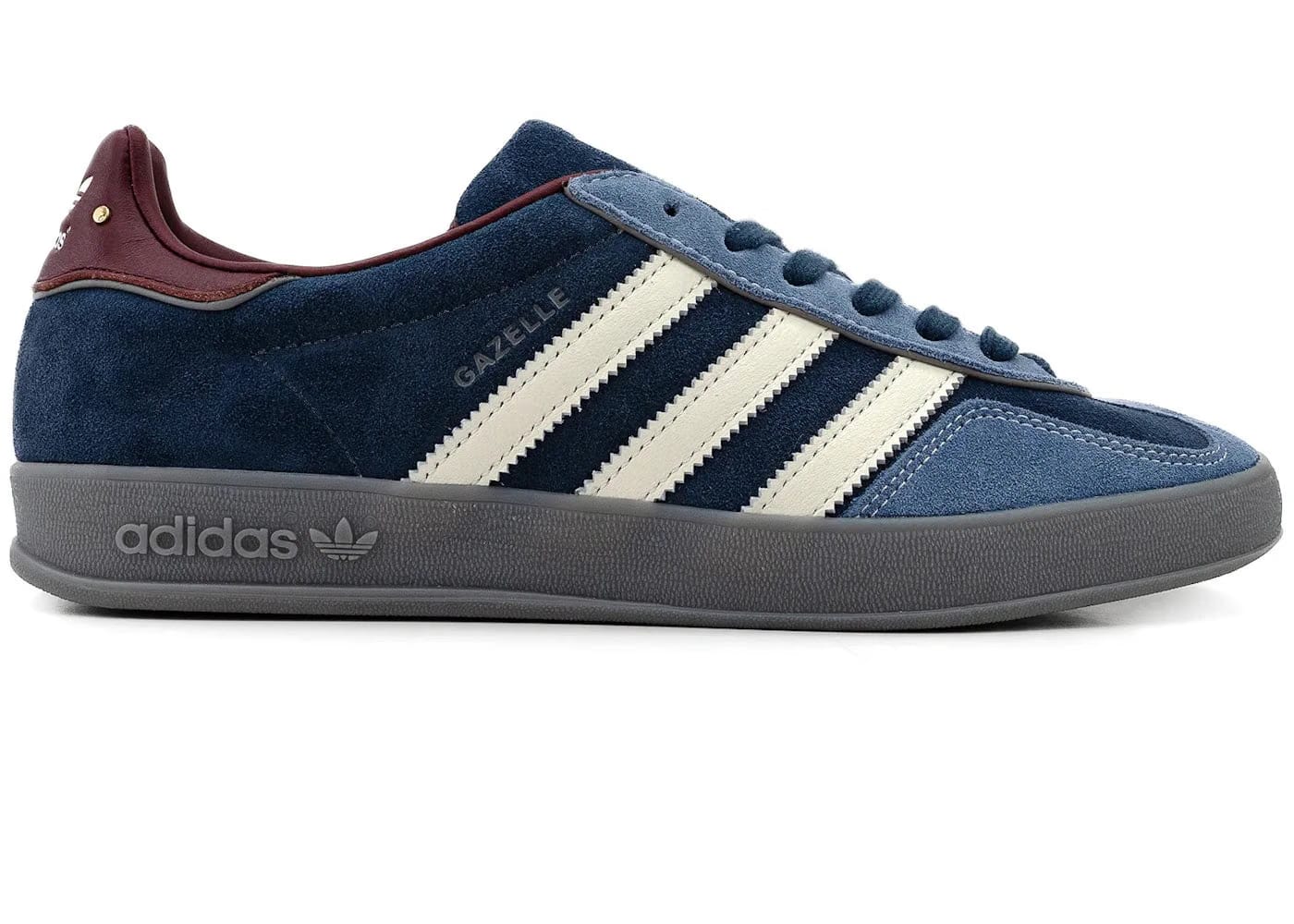
This iteration features a low-top silhouette, meticulously crafted with a navy blue suede upper, complemented by a light blue suede T-toe cap [cite: 4, 6]. The iconic serrated three stripes in white leather adorn the sides, with gold foil 'GAZELLE' branding [cite: 4, 6]. The design incorporates a translucent gum rubber outsole and a burgundy leather heel collar [cite: 4, 6].








.svg)
.svg)
.svg)