The Adidas Samba, initially conceived by Adi Dassler in 1949/1950, emerged as a specialized training shoe. It was designed to support soccer players during matches on icy terrains, a crucial innovation for the sport. The shoe's name, 'Samba,' was chosen to coincide with the 1950 FIFA World Cup, further cementing its connection to the world of football and its cultural roots. This marked the shoe's definitive entry into the world of athletic footwear.
Originally engineered for indoor football and soccer training, the Samba OG quickly transcended its athletic origins. Its exceptional grip and traction, courtesy of the gum rubber outsole with its suction pattern, proved versatile. The Samba's adaptability extended its usability beyond the field, finding favor in casual wear, streetwear, skateboarding, and urban cycling. The design's functionality coupled with its aesthetic appeal cemented its place in diverse environments.
The Adidas Samba's influence is undeniable, shaping subcultures globally. The shoe's presence was notably felt within the UK's football casuals during the 1970s and 1980s, becoming an essential element of their distinctive style. The Samba's adoption by the hip-hop community during the 1980s further amplified its cultural significance. The shoe's enduring appeal is demonstrated by its consistent presence within streetwear, skate culture, and the mod scene, solidifying its status as a timeless icon.
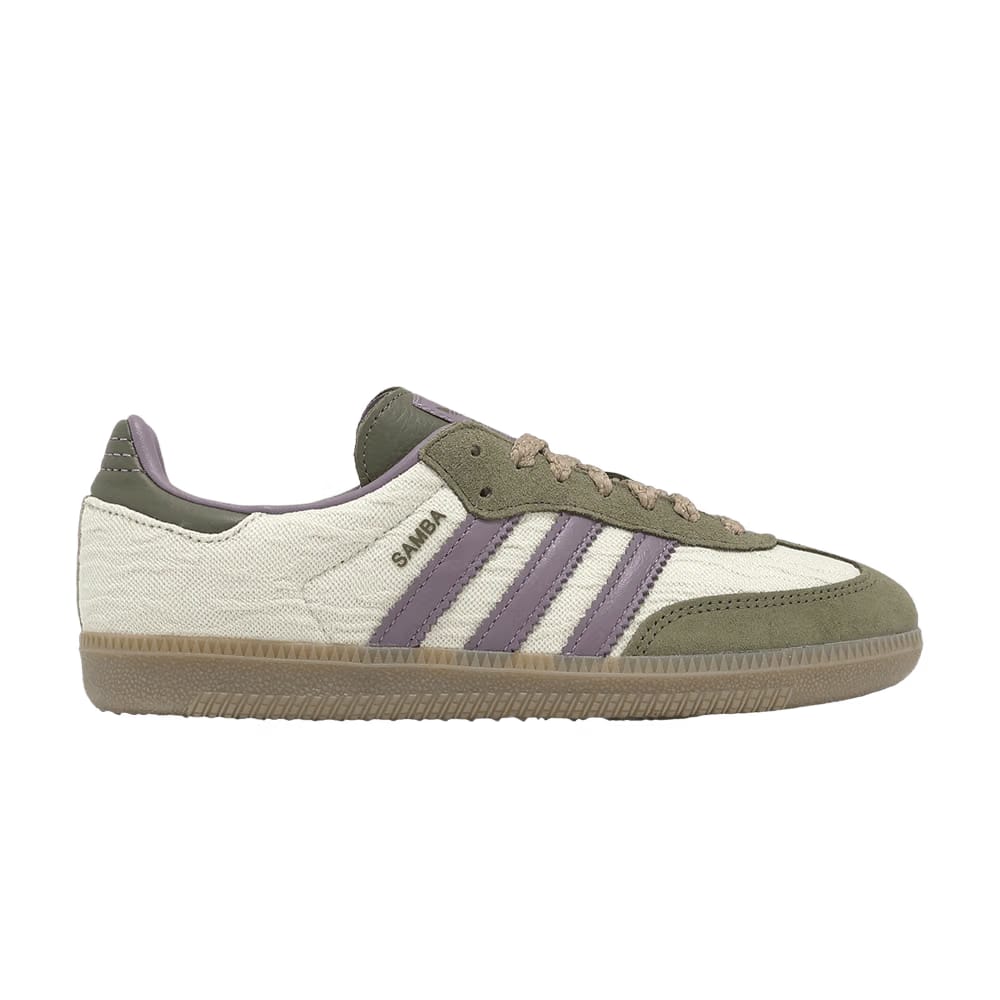
The Samba OG boasts a low-profile silhouette, meticulously crafted with a premium leather upper, further enhanced by nubuck or suede overlays. These materials combine durability with a refined aesthetic, setting a high standard for quality. Signature elements include the iconic serrated 3-Stripes, the distinctive suede T-toe overlay, and the reliable gum rubber cupsole, each contributing to both its visual appeal and functional performance. Gold foil 'Samba' branding adds a touch of prestige.








.svg)
.svg)
.svg)