
Certificate of authenticity
0
Try on
View authenticity certificate

- Upper
- Leather
- Gender
- Women's
- Released
- 2025
- Colourway
- White Orange Gum
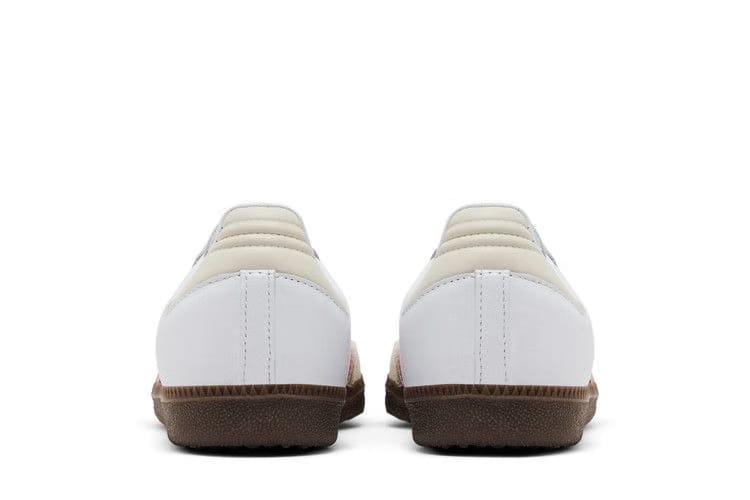
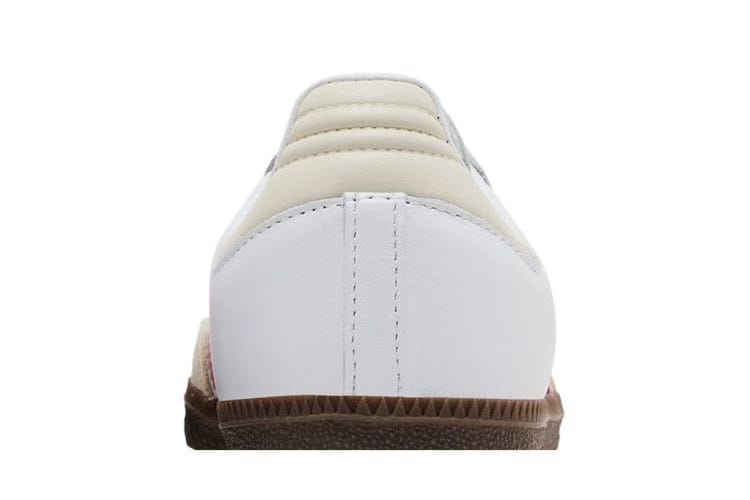
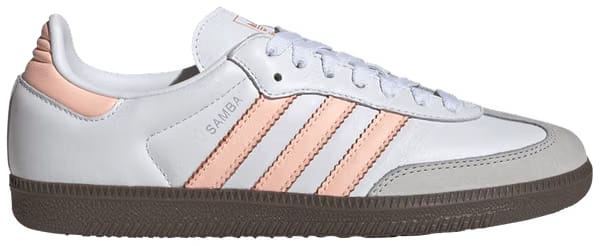
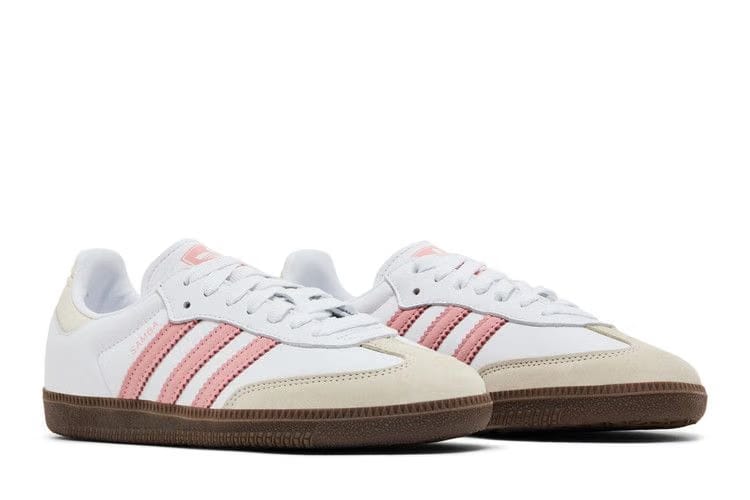
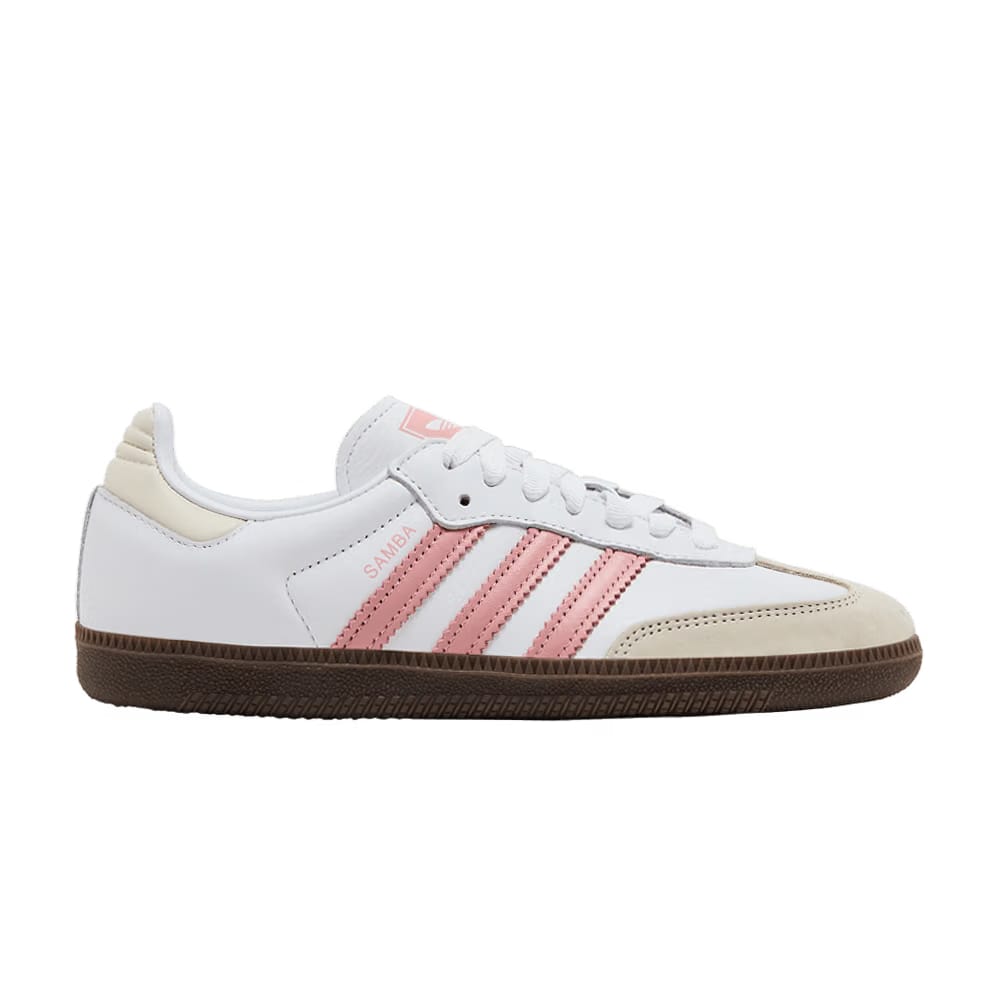
Wmns Samba OG 'White Clear Orange Gum'
Wmns Samba OG 'White Clear Orange Gum'
- Upper
- Leather
- Gender
- Women's
- Released
- 2025
- Colourway
- White Orange Gum
Delivery and authentication

Includes authentication certificate
By CheckCheck global standards
Come see it in person


Culture Note™
Released on 1 April 2025 and part of adidas's Samba line. This release has a leather upper in Cloud White/Wonder Mauve/Off White. The Samba began as a fix for a deeply unglamorous problem. In 1949 Adi Dassler built a football trainer for players stuck on frozen, rock-hard winter pitches and gave it a gum rubber outsole with suction detailing that gripped ice where studs just slid. He named it after the 1950 World Cup in Brazil, which is how a very German, very practical boot ended up carrying a Brazilian dance on its tongue. The T-toe overlay arrived by the 1970s for ball feel in futsal, then English terrace casuals adopted it through the 1980s and never let go. This women's Samba OG runs that blueprint into softer territory: footwear white leather, clear orange trim, semi coral accents, and the gum sole still doing exactly the job it was invented for.
Two recipes. Straight-leg mid-blue denim cuffed just above the collar with a white tee and a tan or rust knit picks up the clear orange without matching it. Second, a long black skirt or wide black trousers with a cream oversized shirt, leaving the orange to do the talking at ankle level. On sizing, the Samba OG is accurate in length but genuinely narrow through the forefoot, so adidas themselves suggest half a size up if your feet are wide, while narrow and average feet stay true to size. Care is simple: leather cleaner and a soft cloth on the white panels, a nubuck brush on the toe cap only, and never a washing machine, because heat yellows a gum sole fast. If you buy the Wmns Samba OG in India, keep them clear of monsoon puddles.
More than 35 million pairs sold puts the Samba second only to the Stan Smith in adidas history, and no other terrace shoe has lived as many lives. Skaters and BMX riders adopted it through the nineties, five-a-side players never stopped, and Grace Wales Bonner's work on the silhouette from around 2020 pushed it back into fashion until it became the default sneaker of an entire cycle. The white-based colourways are the ones that carry it: neutral enough to be a uniform, specific enough to still be a choice. Clear orange and semi coral are what separate this pair from the thousands of plain white Sambas in circulation, warm accents that read as considered rather than loud, and they photograph far better than they sound on paper.
Premium leather runs the upper, which is why the Samba OG breaks in around your foot instead of fighting it, and why it wipes clean after a wet commute. The toe cap is plush nubuck, the panel that takes the most scuffing, and it shifts the texture just enough that the white never reads plastic. The lining is smooth textile, so you can wear these barefoot through summer without the collar sawing your ankle. Serrated 3-Stripes sit along the sidewall in clear orange with semi coral picking up the surrounding detail, and the Trefoil marks the tongue. Underneath, the gum rubber outsole is the original engineering: grippy on wet marble, slim enough to keep the profile low, and it ages into a deeper honey shade rather than looking worn out.
- Upper
- Leather
- Gender
- Women's
- Released
- 2025
- Colourway
- White Orange Gum
Most asked questions
How we always
Guarantee the best prices?

Luxury marketplace
In luxury marketplaces, prices depend on demand — less popular items sell below retail.
.svg)
Competition between sellers
Our 5,000+ verified sellers compete with each other, giving you the lowest prices.
.svg)
Price comparison
We show you price comparisons across sellers so you always get better deals.
.svg)
Helping sellers, helping you
We help sellers buy smarter inventory, so they can offer you better prices.
Loading…