

Certificate of
Authenticity
Authenticity


0
Try on
View authenticity certificate

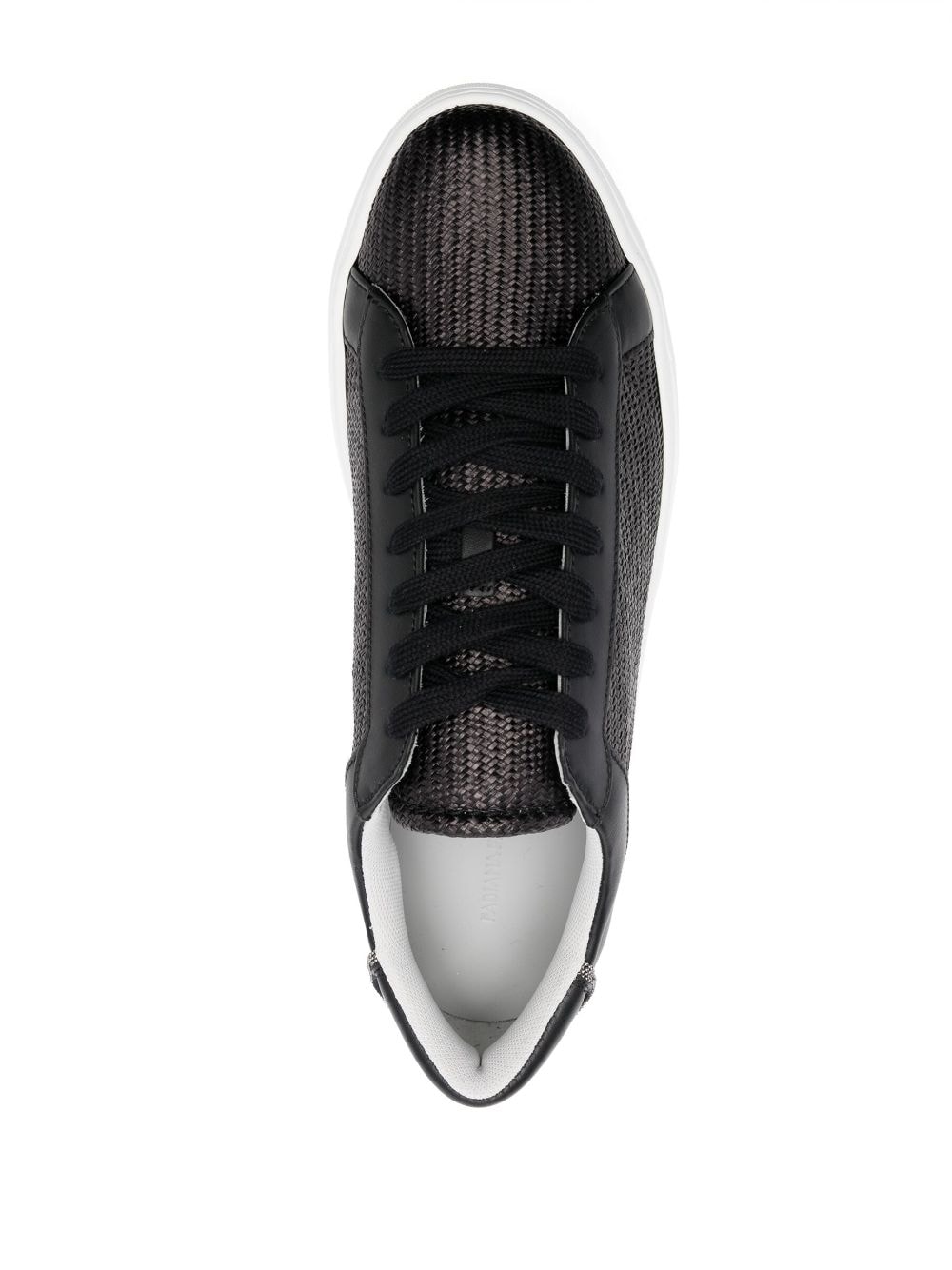
round-toe low-top sneakers
round-toe low-top sneakers
DELIVERY AND AUTHENTICATION

Includes Authentication Certificate
by Checkcheck global standards
Culture Note™
The genesis of the round-toe low-top sneaker traces back to the late 1800s and early 1900s, emerging from the realm of athletic footwear crafted from canvas and rubber. These early iterations laid the groundwork for a design that would later permeate various facets of culture. The evolution from utilitarian athletic wear to a staple of everyday fashion marked a significant transformation in the history of footwear.
Primarily designed for casual and everyday use, round-toe low-top sneakers exhibit remarkable versatility, easily complementing a wide array of outfits. These sneakers have transcended their athletic origins to find acceptance in business-casual environments. Early models were initially designed for athletic activities, such as tennis, showcasing their adaptability and enduring appeal across various contexts.
The cultural impact of the round-toe low-top sneaker is undeniable, resonating across numerous subcultures. Its association with hip-hop, punk, skateboarding, and streetwear underscores its influence. The low-top sneaker's presence in the world of fashion has been immense, becoming a canvas for self-expression and a symbol of rebellion. This iconic footwear has firmly established itself as a cornerstone of contemporary style.
The construction of the round-toe low-top sneaker embraces a diverse range of materials, including leather, canvas, mesh, and suede, offering a spectrum of options. The uppers can be fashioned from full-grain, PU, napa, or nubuck leather, while the outsoles are generally made of durable rubber. Advanced foam materials are frequently incorporated into the midsole, providing cushioning and support, thus enhancing both comfort and performance.
Most asked questions
How we always
Guarantee the best prices?

Luxury marketplace
In luxury marketplaces, prices depend on demand — less popular items sell below retail.
.svg)
Competition between sellers
Our 5,000+ verified sellers compete with each other, giving you the lowest prices.
.svg)
Price comparison
We show you price comparisons across sellers so you always get better deals.
.svg)
Helping sellers, helping you
We help sellers buy smarter inventory, so they can offer you better prices.
Loading…