
Certificate of
Authenticity
Authenticity
0
Try on
View authenticity certificate

- Upper
- Nylon
- Released
- 2024
- Colourway
- Olive Gum
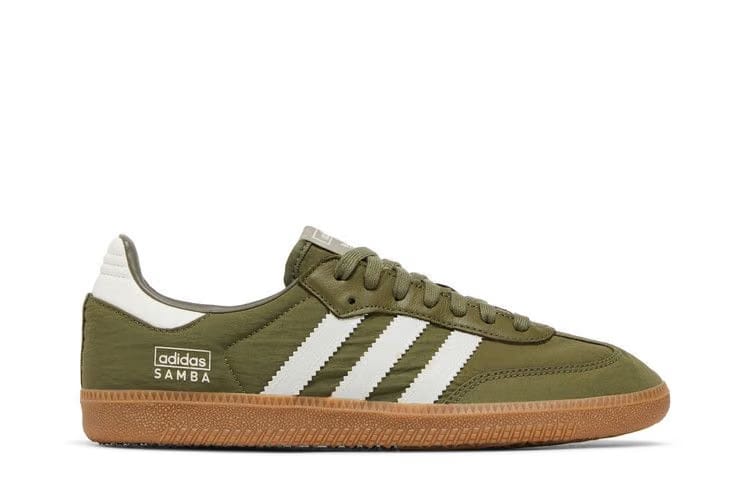
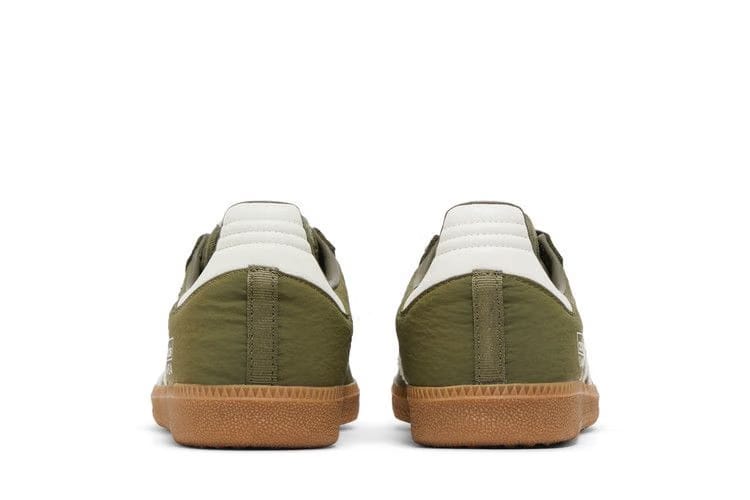
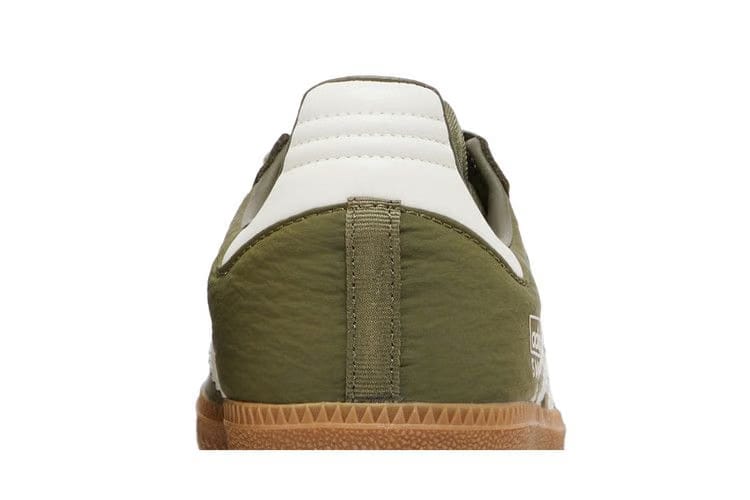
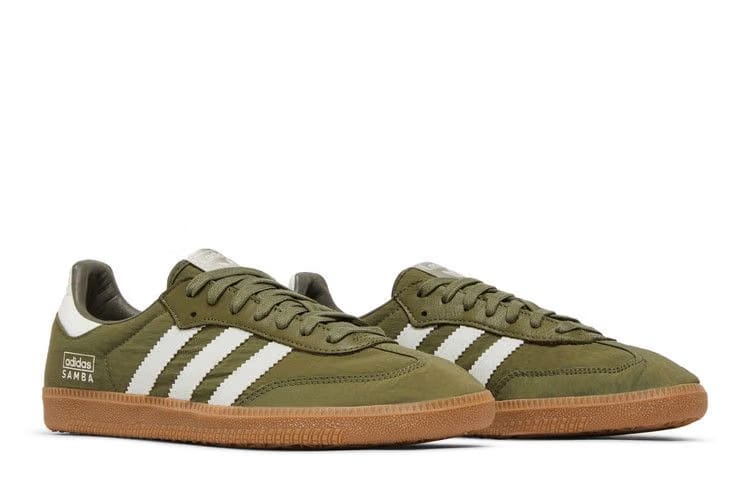
Adidas Samba OG Focus Olive Gum
Adidas Samba OG Focus Olive Gum
- Upper
- Nylon
- Released
- 2024
- Colourway
- Olive Gum
DELIVERY AND AUTHENTICATION

Includes Authentication Certificate
by Checkcheck global standards
Culture Note™
Released on 3 January 2024 and part of adidas's Samba line. This release has a nylon upper in Focus Olive/Wonder White/Gum. Focus Olive is the Samba admitting it has become a menswear shoe. Olive is a wardrobe colour rather than a sports colour, borrowed from military surplus and workwear, and it sits on this silhouette differently to any team palette: it makes the shoe look like an item you own rather than a piece of kit you were issued. Underneath the colour, nothing has changed. The Samba was built so footballers could play on hard and frozen ground, low and flat, close to the surface, and the toe overlay exists because that is where a ball hits the shoe. Olive with a gum sole is the pairing that best flatters the model's proportions, since the warm sole tone continues the earthy palette instead of interrupting it.
Two ways. Workwear leaning: brown or tan chinos with a slight break, a chore jacket and a cream tee, where the olive and the gum sole tie into a warm palette. Or clean contrast: black straight jeans with a grey knit, letting the olive read as a considered neutral rather than a colour. Right for daily wear, casual offices, travel and autumn. Wrong for heavy rain, where olive suede darkens in patches and takes days to even out. Sambas run long and narrow, so half a size down suits most feet. Protect the suede before the first wear, brush the nap with a rubber suede brush, and clean the gum sole early with a damp cloth or eraser, since gum darkens with age and will not return to its original tone.
The Samba became a wardrobe default without being sold as one, which is the recurring adidas story. Run-DMC wrote My Adidas unpaid in 1986 and the endorsement that followed was the first between a musical act and an athletic company, described by Questlove as hip hop's tipping point. The Superstar sold over 15 million pairs in 2015 alone. The Samba took the slow route, through football culture and then through everyone who wanted a flat, narrow shoe after a decade of chunky ones. Olive marks the moment the shoe stopped being read as sportswear and started being bought as menswear, alongside trousers rather than tracksuits.
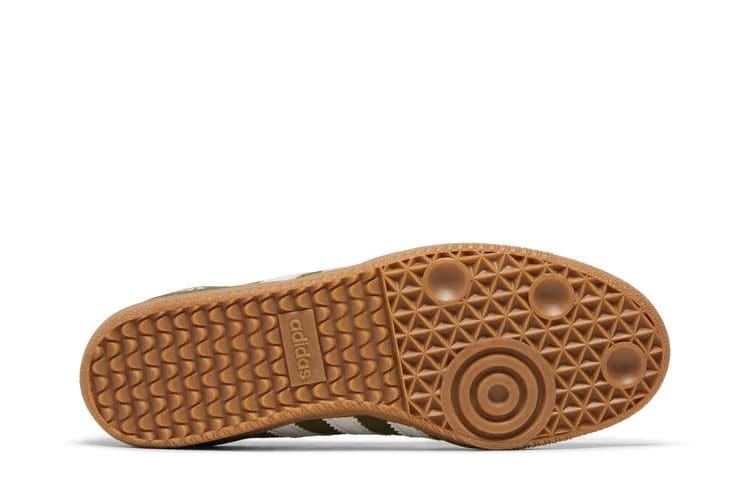
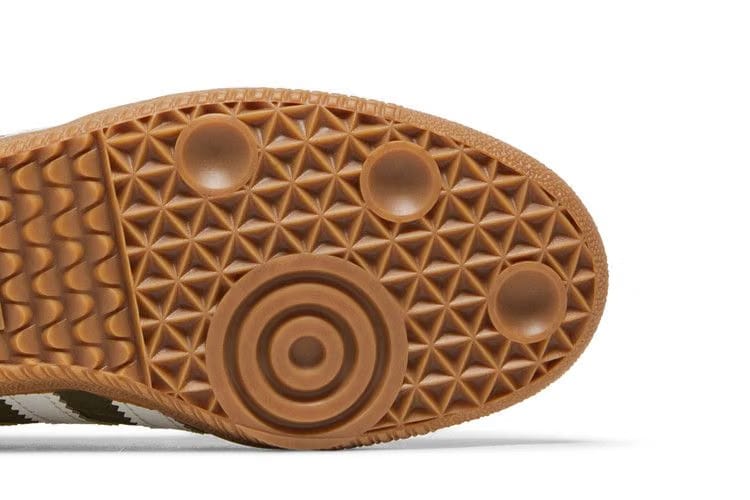
The gum outsole is the reason this colourway works. Gum rubber grips hard indoor surfaces without marking them, and its amber tone reads as a natural continuation of an olive upper, so the shoe holds together as one object. Above it, the suede toe overlay protects the front, the Three Stripes are stitched to the flank in the structural tradition that dates back to when the stripes reinforced the upper, and the low profile keeps you in contact with the ground with no cushioning system involved. Olive suede is one of the more forgiving finishes on this shape, hiding dust and dry dirt well, though it will still water mark and it darkens noticeably in the rain.
- Upper
- Nylon
- Released
- 2024
- Colourway
- Olive Gum
Most asked questions
How we always
Guarantee the best prices?

Luxury marketplace
In luxury marketplaces, prices depend on demand — less popular items sell below retail.
.svg)
Competition between sellers
Our 5,000+ verified sellers compete with each other, giving you the lowest prices.
.svg)
Price comparison
We show you price comparisons across sellers so you always get better deals.
.svg)
Helping sellers, helping you
We help sellers buy smarter inventory, so they can offer you better prices.
Loading…