The Adidas Superstar, a progenitor of the Slip-On variant, first graced the world in 1969 [cite: 1, 3, 4, 5, 19, 23, 27, 30, 33, 34, 37]. Initially conceived for the basketball court, it rapidly transcended its athletic origins [cite: 1, 3, 4, 5, 16, 19, 23, 27, 30, 34, 37]. This iconic design paved the way for the Slip-On, a modern iteration that emerged in the 2010s [cite: 27].
Primarily intended as casual footwear, the Adidas Superstar Slip-On serves as a lifestyle sneaker [cite: 1, 3, 4, 5, 6, 7, 8, 23, 27, 30, 32, 33, 34]. Its versatile design makes it suitable for everyday wear, blending seamlessly with various styles [cite: 3, 5, 16, 23, 27, 30, 31, 34]. The slip-on construction provides convenience, while the robust materials ensure longevity [cite: 1, 2, 4, 7, 8, 11, 23, 33].
The Adidas Superstar, and by extension its Slip-On iteration, has profoundly impacted global culture. The shoe's early adoption by NBA stars, including Kareem Abdul-Jabbar, solidified its athletic credibility [cite: 1, 3, 4, 5, 16, 19, 23, 27, 30, 34, 37]. Furthermore, the Superstar's embrace within the hip-hop scene, particularly by Run D.M.C., transformed it into a symbol of street style [cite: 3, 5, 16, 19, 25, 27, 30, 34, 37]. Its enduring appeal continues to resonate within street style and athleisure subcultures, cementing its status as an immutable icon [cite: 34].
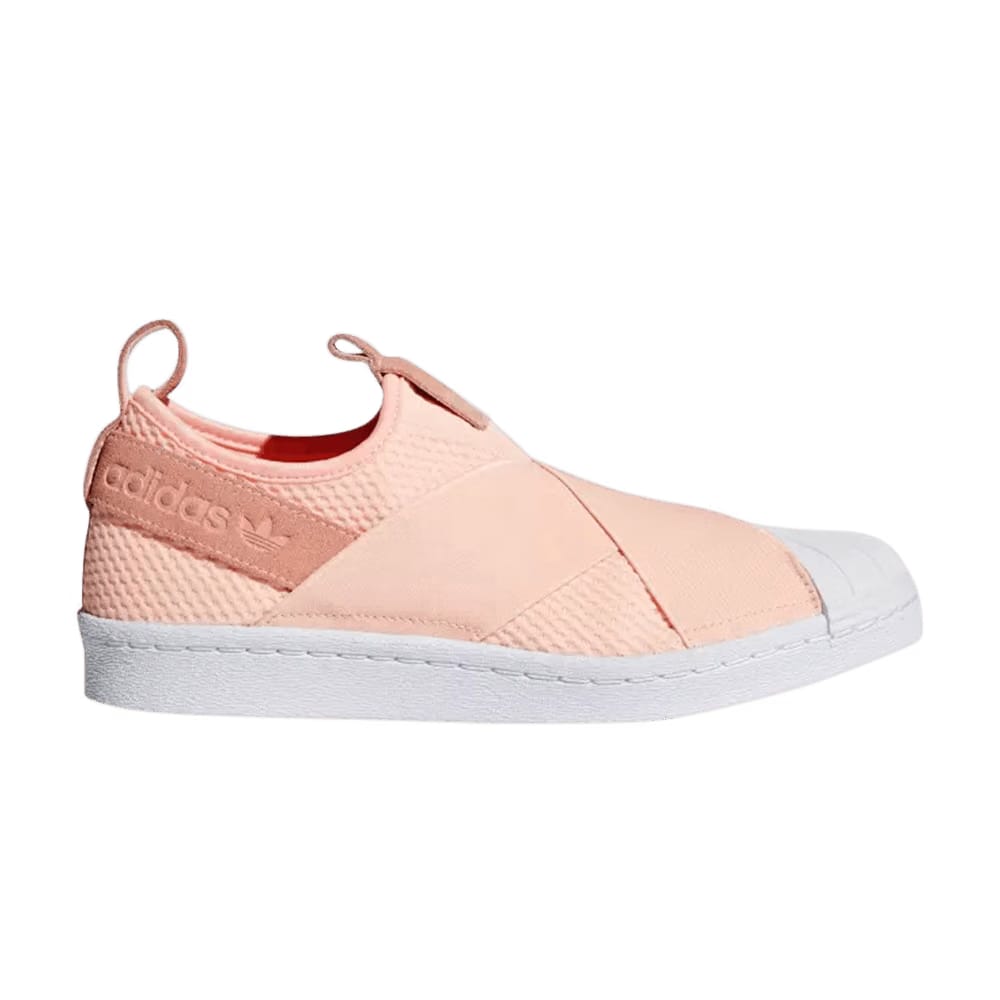
The Adidas Superstar Slip-On boasts a streamlined, laceless design, centered around ease of wear [cite: 1, 2, 4, 7, 8, 11, 23, 33]. It typically features a leather upper, paired with a durable rubber outsole, and lined with textile for comfort [cite: 1, 2, 4, 8, 23, 33]. Signature elements such as the rubber shell toe and serrated 3-Stripes remain, identifying the shoe's heritage [cite: 1, 3, 4, 5, 7, 19, 23, 27, 30, 33, 34, 37].








.svg)
.svg)
.svg)