
Certificate of
Authenticity
Authenticity
0
Try on
View authenticity certificate

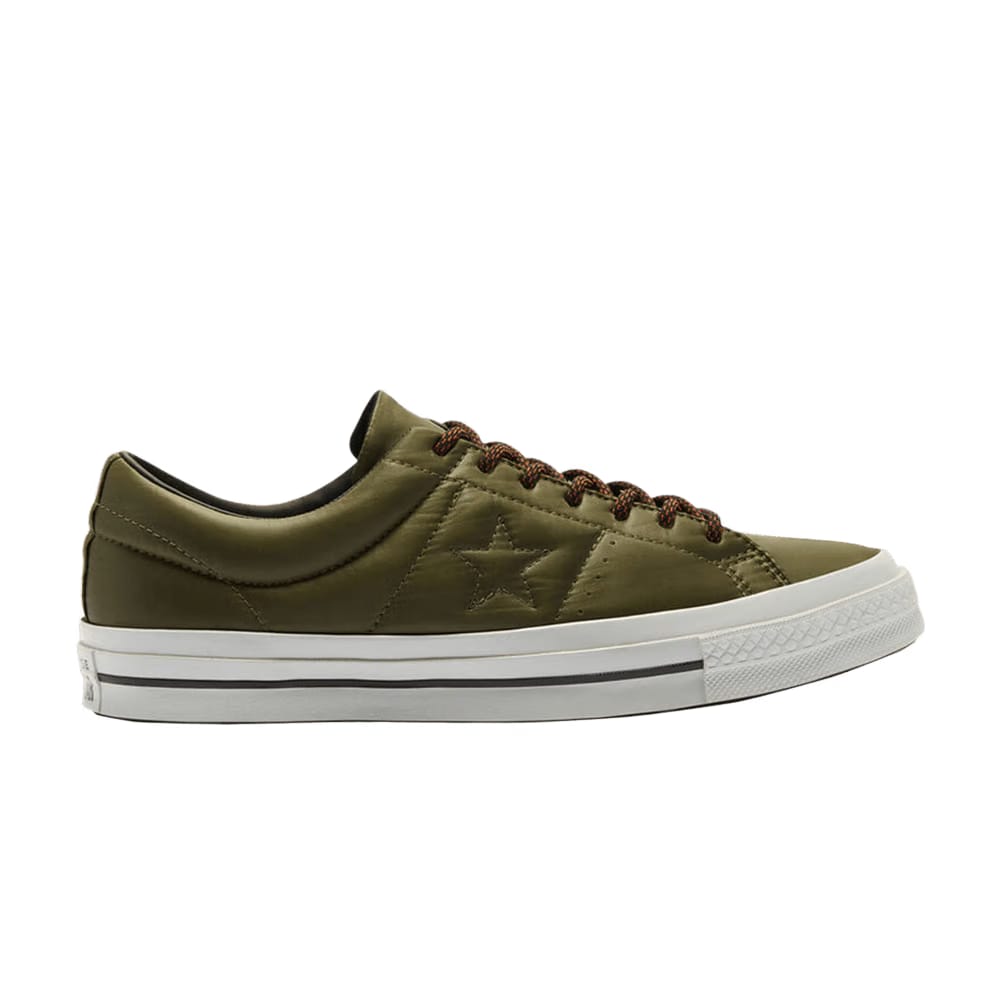
Converse One Star Cons Low Workwear - Field Surplus
Converse One Star Cons Low Workwear - Field Surplus
DELIVERY AND AUTHENTICATION

Includes Authentication Certificate
by Checkcheck global standards
Culture Note™
The Converse One Star emerged in the late 1960s, initially designed for basketball, under the moniker 'Leather All Star'. This initial iteration laid the groundwork for its eventual cultural significance, establishing a legacy that would resonate for decades to come [cite: 1, 2, 3, 5, 7, 8, 9, 12, 16, 25]. The shoe’s evolution reflects a broader shift in athletic footwear, moving from the court to the streets [cite: 1, 2, 3, 5, 7, 8, 9, 10, 20, 28, 25]. Its re-release in the 1990s marked a pivotal moment, cementing its place in counter-culture.
Primarily designed for casual wear and lifestyle purposes, the One Star Cons Low also caters to the demands of skateboarding [cite: 11]. Its design prioritizes comfort and durability, featuring cushioning technology such as CX foam, Lunarlon, or molded polyurethane sockliners [cite: 11]. The vulcanized rubber sole with its classic Converse traction pattern offers superior grip, essential for both everyday use and performance on a skateboard [cite: 11].
The Converse One Star has left an indelible mark on youth culture, embraced by icons across various creative fields. Kurt Cobain, a monumental figure in grunge, was frequently seen sporting the One Star during the 1990s [cite: 3, 5, 7, 9]. The shoe's influence extended into skateboarding, notably with Guy Mariano, who wore them in the skate video 'Mouse' in 1996 [cite: 3, 8, 10]. Tyler, the Creator, through his collaborations, such as Golf le Fleur, has consistently championed the One Star, solidifying its status in contemporary fashion [cite: 5, 8, 9, 25, 27].
The 'Workwear - Field Surplus' variant, the One Star Cons Low, features a durable canvas upper, demonstrating Converse's commitment to both style and resilience [cite: 4, 11]. The design incorporates a vulcanized rubber sole, a signature element providing both grip and a distinct aesthetic [cite: 11]. The use of materials like rubber and poly/cotton laces, similar to the CONS One Star Pro, highlights the shoe's focus on quality [cite: 11].
Most asked questions
How we always
Guarantee the best prices?

Luxury marketplace
In luxury marketplaces, prices depend on demand — less popular items sell below retail.
.svg)
Competition between sellers
Our 5,000+ verified sellers compete with each other, giving you the lowest prices.
.svg)
Price comparison
We show you price comparisons across sellers so you always get better deals.
.svg)
Helping sellers, helping you
We help sellers buy smarter inventory, so they can offer you better prices.
Loading…